Lower School: IGCSE Courses for Years 9 and 10
Rigorous Academics. Real Flexibility. Live Online.

An IGCSE-style, internationally minded Lower High School programme — where students develop the habits of mind, global awareness, and independent thinking that every great upper school education demands.
A Cambridge-Aligned Programme Built for Curious, Global Minds
Years 9 and 10 at Allbright Global Academy mark the beginning of serious, structured academic study. Aligned with the Cambridge IGCSE framework, our Lower High School programme challenges students to go beyond recall — to analyse, argue, investigate, and form their own well-reasoned views on the world around them.
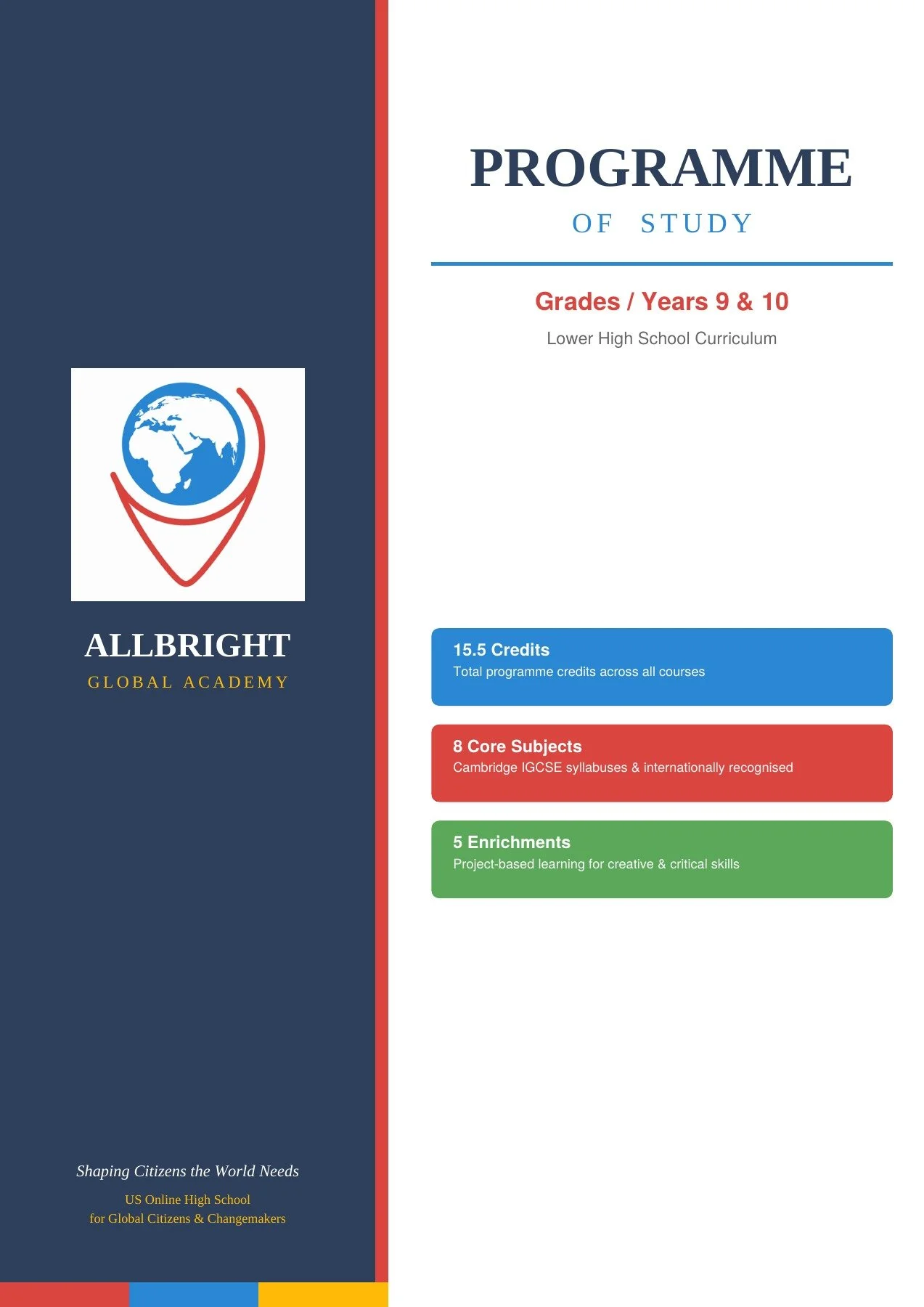
Every course is available on two pathways: the Examination Pathway, which prepares students for Cambridge IGCSE qualifications recognised worldwide, and the Non-Examination Pathway, which develops the same depth of knowledge through coursework, projects, and presentations.
How our week is structured
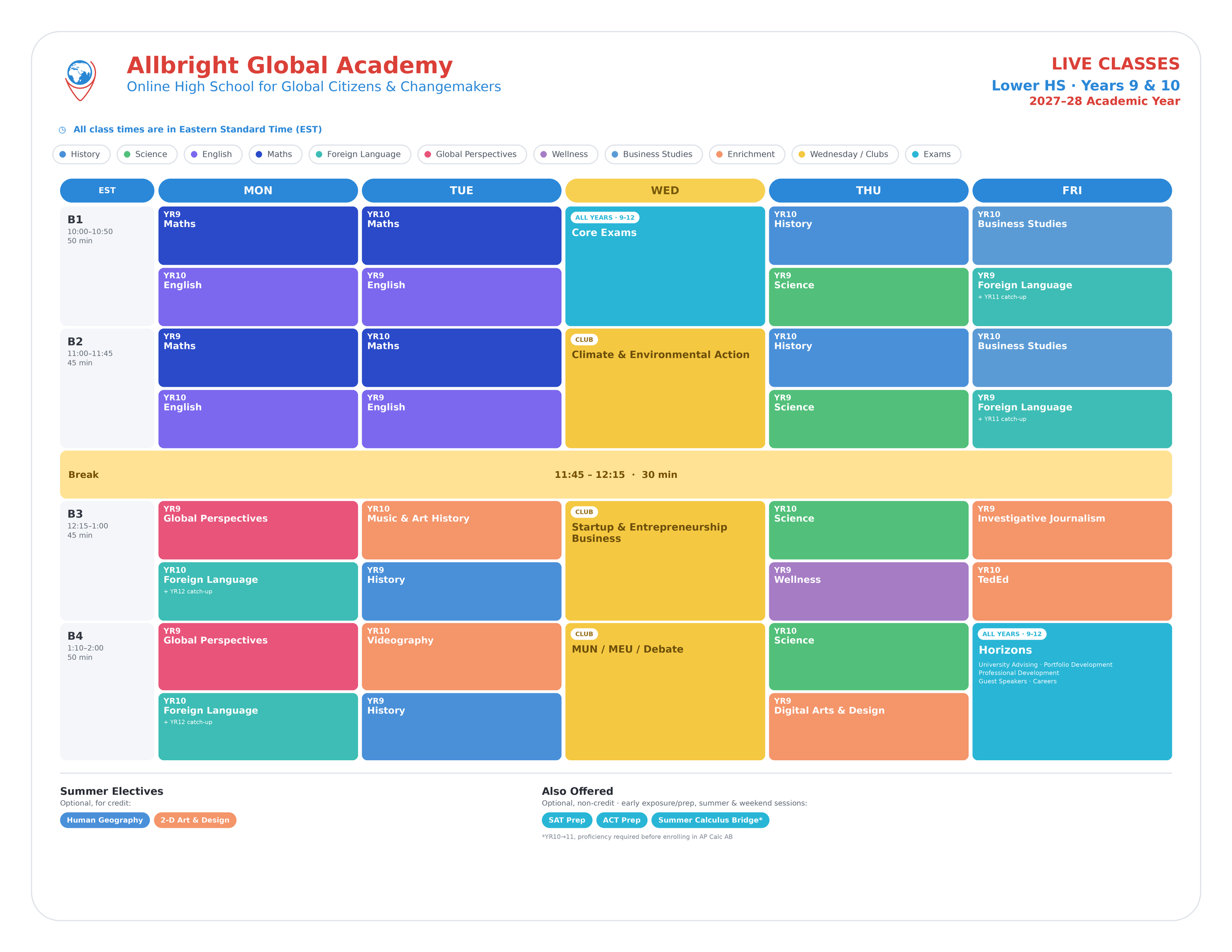
Live classes run Monday, Tuesday, Thursday, and Friday — all between 10:00 am and 2:00 pm Eastern Time. Wednesday is reserved for independent study, club activities, and scheduled examinations. Every student has two live lessons per core subject each week, access to a recorded lesson covering more challenging content and providing homework guidance, and dedicated time built into the schedule to develop effective time-management skills.
For families in Europe, our live session window falls 4:00–8:00 pm Central European Time.
Wednesday is one of the things our students love most about Allbright Global Academy. Instead of a full day of classes, students choose from our club programme — building skills, making friends, and pursuing interests that sit alongside their academic work.
Model United Nations, Model European Union, & Debate
Startup & Entrepreneurship Business
Climate & Environmental Action
Strong Foundations. Global Citizenship. Your Schedule.
University & Career Guidance
Starting in Year 9
At Allbright Global Academy, university and career guidance is not something that begins in the final year of school. It begins here, in Year 9 — because the decisions students make early about how they spend their summers, which electives they pursue, and which subjects they genuinely connect with have a direct bearing on the opportunities available to them later. Our guidance programme works alongside the academic curriculum from the very first year, helping students develop self-awareness about their strengths, curiosity about different fields, and a long-term sense of direction.
In Years 9 and 10, this means regular conversations about interests and ambitions — not to lock students into a path prematurely, but to ensure they are exposed to a genuinely wide range of disciplines before they reach Upper School. History, Global Perspectives, the Sciences, Mathematics, English, and the Arts are not just subjects to pass — they are windows into possible futures. Students who discover an affinity for political science through Global Perspectives, or a talent for analytical writing through English, leave Year 10 with real self-knowledge that shapes their Upper School course selections meaningfully.
Guidance also extends beyond the classroom. We help students think strategically about their summers — identifying enrichment opportunities, study experiences, and activities that reflect genuine interest and build authentic profiles. Whether a student is drawn to medicine, law, environmental science, entrepreneurship, the arts, or something they haven't yet named, our advisors work with them and their families to ensure that by the time they enter Years 11 and 12, they are not choosing a schedule at random. They are choosing a direction.

Guest speakers from the real world
Our students don't just read about the world — they hear from the people shaping it. Guest speakers join our classes throughout the year: documentary filmmakers investigating the human cost of climate change, lawyers representing asylum seekers at the frontlines of international law, representatives from civil society organisations influencing policy at the United Nations and beyond. These conversations are not extras — they are part of the education.
Study trips that bring history to life
In Years 11 and 12, students have the opportunity to join our on-site learning experiences — immersive trips that connect what they have studied in the classroom to the places, institutions, and landscapes where history was made and is still being made.

Strong Foundations. Bright Futures.
Discover our course offerings!
Reserve your spot today.
Don't Let the World Pass You By
Allbright Global Academy brings together students from across the world — learning together, live, every week.
